
Burger King UK pushes ahead with 30-a-year opening plan despite rising wage costs
Posted by Emily on 11th Dec 2025 Reading Time:
Burger King UK has set out plans to open around 30 new restaurants a year from 2026, signalling fresh confidence in the fast food market despite weaker consumer sentiment and rising labour costs.
The chain, which currently operates 574 restaurants across the UK, reported that revenues rose 7% to £408.3m in the year to 31 December 2024, with like-for-like sales up 4.5% to £347m. Underlying earnings before interest, tax, depreciation and amortisation increased 12% to £26m, supported by tighter cost control and operational efficiencies.
Chief executive Alasdair Murdoch described 2024 as “another year of solid performance and strategic progress” for the brand, despite what he called a “challenging” macroeconomic environment. Trading in 2025 has remained “robust”, with system-wide sales in the UK surpassing 1 billion US dollars (about £748m).

Expansion plans and fresh investment
Burger King has confirmed that from 2026 it intends to open about 30 new UK sites each year, with a focus on company-owned outlets. The strategy builds on recent openings and acquisitions: the group opened 13 restaurants, bought two sites from sub-franchisees and completed 18 refurbishments during 2024.
New funding is helping to underpin the expansion. Private equity owner Bridgepoint has invested £15m into Burger King UK in recent days, with a further £20m expected over the next 18 months, according to reports. The business has also signed a new 20-year master franchise agreement with a subsidiary of Restaurant Brands International that extends its franchising rights to the Republic of Ireland, opening up another growth market.
Burger King currently owns 284 of its 574 UK restaurants directly and employs around 6,000 people.

Trading performance in a difficult climate
Management attributes recent revenue and profit growth to a mix of home delivery, targeted marketing and improved in-store trading. Home delivery volumes have been a key driver of like-for-like sales, while upgrades to restaurant formats and menus are aimed at encouraging customers to spend more when they do visit in person.
Murdoch said that although inflation in food and utility costs has “returned to more normal levels”, the wider hospitality sector continues to grapple with “softer consumer sentiment and rising labour costs” following significant increases in the National Minimum Wage and National Living Wage. The company has also pointed to ongoing pressure on household finances and lingering cost increases linked to previous government budgets as factors weighing on the market.
Despite this backdrop, Burger King has reported “further signs of improvement” across the estate this year, helped by the slowdown in inflation. The company has maintained what it describes as “good momentum” into the first half of 2025.
Menu innovation and premium positioning
Product development has been central to the brand’s recent performance. Burger King has refreshed its core Whopper line and launched The Wagyu, a premium burger made with 100 per cent British wagyu beef, served in a brioche bun with rocket, onions and caramelised onion mayonnaise.
The Wagyu, which is marketed with the support of chef Gordon Ramsay, has been positioned as an £11 high-end menu item and is reported to have contributed to about 15% of sales in 2025 so far. For operators across hospitality, including fish and chip businesses, the success of a premium burger at this price point illustrates how some consumers remain willing to trade up within the quick-service category, even as overall budgets are under strain.
Digital, delivery and the data race
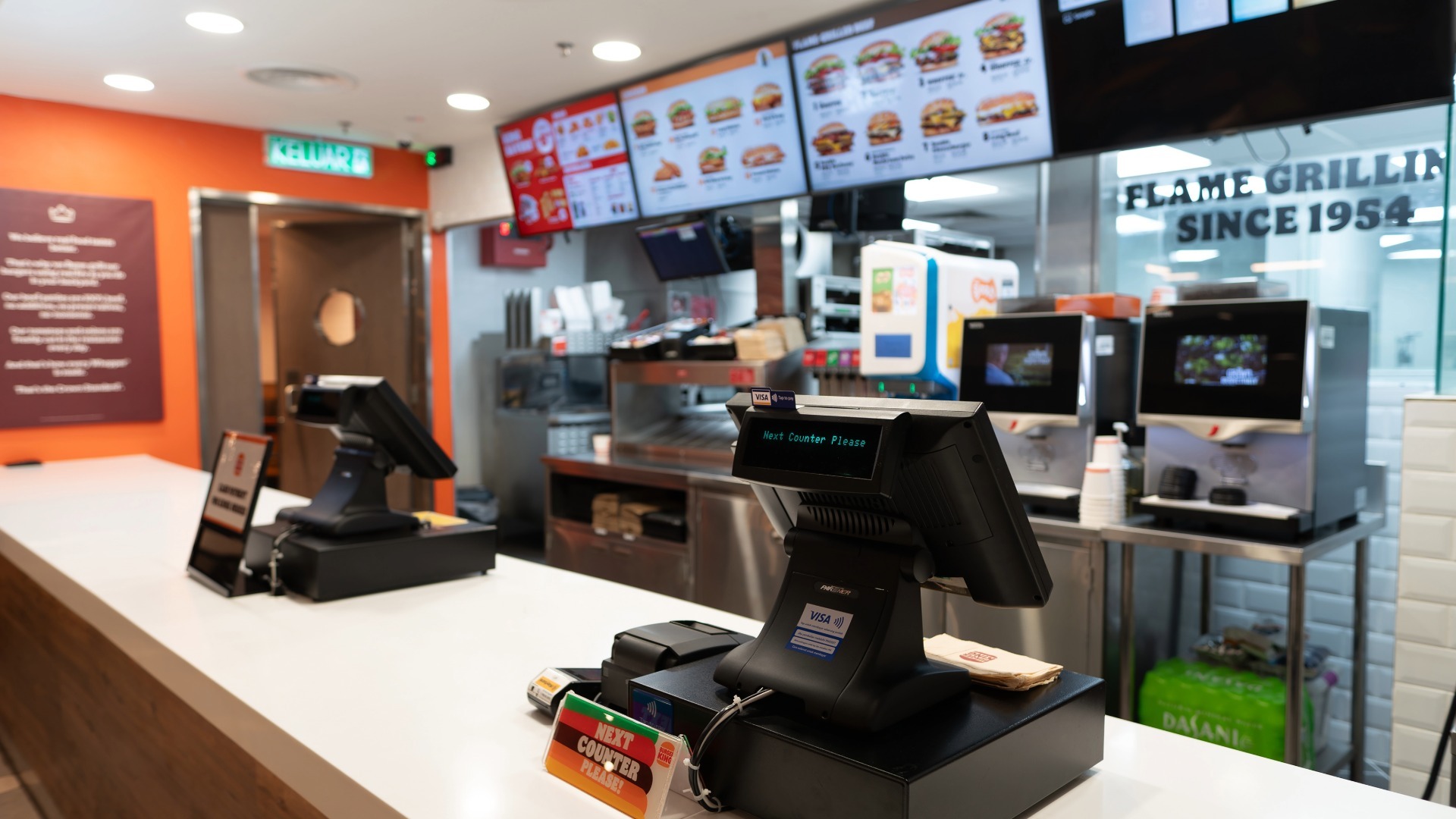
Alongside menu innovation, Burger King is investing heavily in technology. The chain has continued to roll out self-service kiosks across its restaurants and now counts more than 2.5 million users of its UK app.
These platforms are being used to trial personalised digital offers and loyalty mechanics, while the group is also exploring how artificial intelligence can improve operational efficiency. The company credits increased home delivery and digital ordering with supporting its like-for-like growth and providing data that can inform pricing, promotions and site selection.