
#235: The truth about value, ownership and building a business that lasts with Andrew Markou from Businessesforsale.com
Posted by Emma on 6th Dec 2025 Reading Time:
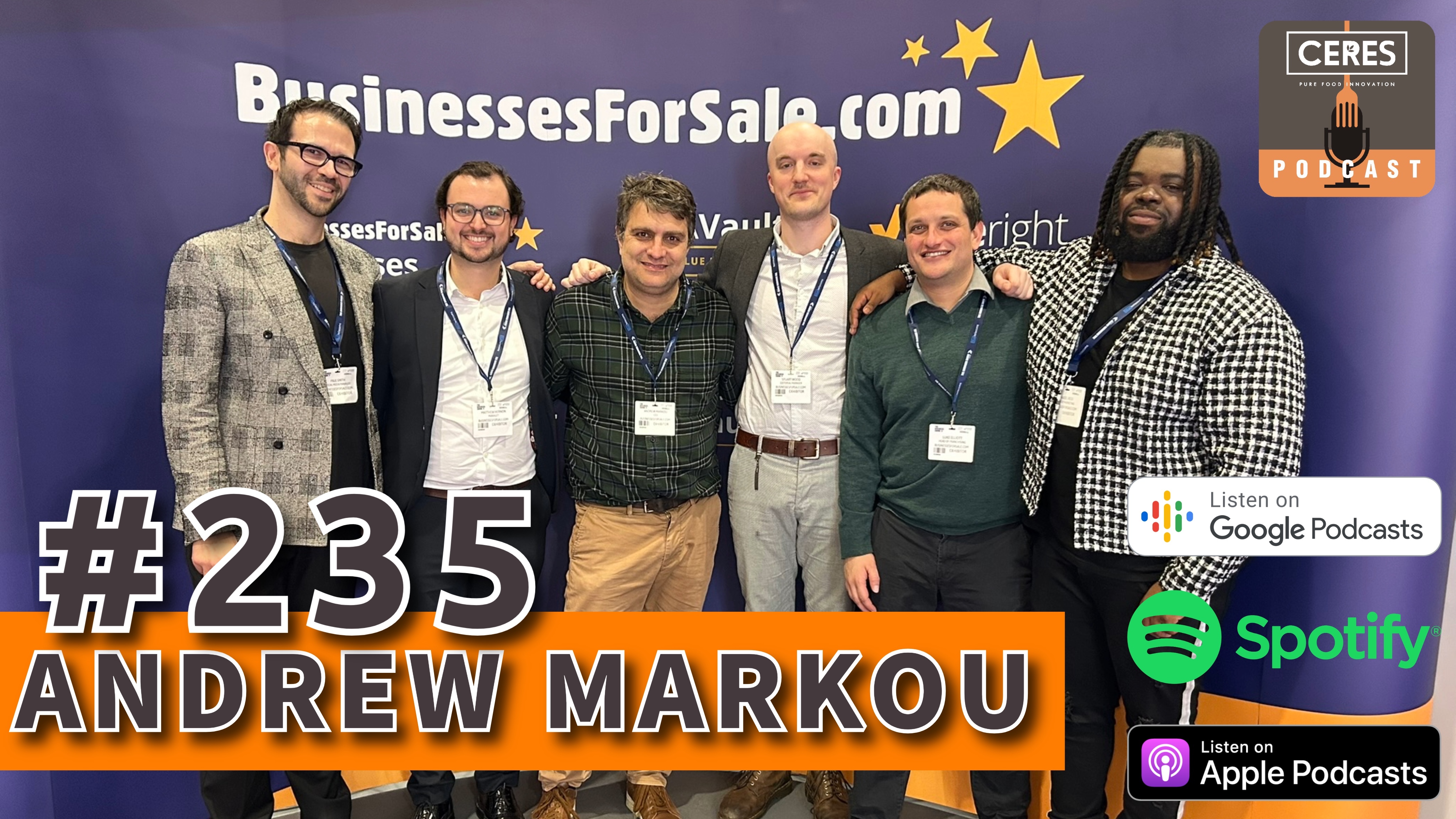
What does a business owner actually sell when they put a fish and chip shop, café, or takeaway on the market? And what are buyers really paying for behind the headline price? Episode 235 of The Ceres Podcast answers those questions with refreshing plainness. Stelios is joined by Andrew Markou, CEO and co-founder of Businessesforsale.com, for a conversation that cuts through the noise around valuations, growth and exit strategy. The timing matters. With margins under pressure and more owners quietly considering succession planning in hospitality, this episode feels less like theory and more like a practical briefing for the trade.
What makes the episode stand out in the season is its refusal to romanticise ownership. Instead, it keeps returning to the same grounded idea: a good business is one that produces reliable cash flow and can function without the owner glued to the range.
Who this episode is for:
• owners thinking about selling a fish and chip shop in the next few years
• buyers looking at buying a takeaway business or small hospitality site
• operators planning a second site and wondering what “scalable” really means
• anyone still valuing a business mainly on turnover rather than cash flow
• first generation owners who feel stuck in the “buying a job” trap
How Businessesforsale.com grew from a local succession problem
Andrew’s story begins with a very trade-specific reality. His father, a Birmingham accountant serving many ethnic and catering businesses, kept seeing owners reach the same point: they wanted out, but their children did not want to take over. He started matching buyers and sellers informally, acting as an “honest broker,” and what began as a local solution later became a printed magazine.
In the mid to late 1990s, Andrew pushed the business fully online. He notes that there was no established model for a business marketplace back then. They committed to the internet because of its scalability and its ability to reach cash flow positivity faster, which he calls the bedrock of survival.
Key theme 1: Cash flow valuation beats turnover rules
The most valuable section for hospitality operators is also the simplest. Stelios and Andrew unpack why old turnover-based pricing is not enough. Stelios recalls how chip shops used to be priced on takings, partly because cash businesses were murky. Andrew agrees that takings-based rules were convenient, but says the established approach is cash flow, or more specifically adjusted seller earnings.
Andrew explains it in everyday terms: buyers pay upfront for a future stream of cash, so the business is best seen as an engine of cash flow. In the catering and hospitality trade, he says businesses top out around three to four times cash flow, with legitimate add-backs such as owner takings.
Stelios reinforces that point with a vivid personal anecdote from a friend who told him sales only matter once invoices are paid, and that without cash flow a business dies. It is a blunt reminder for anyone wondering how to value a hospitality business properly.
Key theme 2: Build a business you can sell, not a job you must work
A recurring message throughout the episode is that owner dependence quietly destroys value. Andrew urges owners to think strategically early, and to factor in the cost of day-to-day management so the business doesn’t rely on one person’s energy. He points out that scalability has to be designed, not hoped for.
Stelios lands the point with a perfect industry example. He describes a shop owner who comes in for early prep and checks, then lets the team run the day. When teased about never working, the friend replies, “I bought a business not a job.” That line captures the episode’s core lesson for any operator thinking about an exit strategy for small business owners.
Key theme 3: Systems win, even before you think about growth
Andrew argues that most owners only sell once or twice in a lifetime, so it is worth using professional advice rather than muddling through alone. He recommends brokers and advisers who do deals constantly, because they know how to protect value and represent the asset properly.
That leads into an unexpectedly practical exchange on presentation. Stelios says many self-sellers damage their price with poor photos and messy premises, comparing it to trying to sell a car without washing it. Andrew agrees, saying that even if cash flow is the core of the deal, hospitality businesses still live in a physical world, and buyers judge what they can see. It is a small moment, but a useful reminder for anyone preparing to sell a takeaway business.
Key theme 4: Franchising is becoming a serious UK route
The franchising section is both lively and relevant to modern operators. Stelios questions whether UK snobbery about franchises is fading. Andrew says it is, and that even owners who never plan to franchise should build their businesses as though they are, with clear systems and repeatable standards.
He frames a good franchise as a “cash-flowing” business where the owner benefits from a proven system and support. He also points to the rise of multi-unit franchise owners as a sign the model is maturing, sharing the example of a man in his late twenties who runs four gym franchises without being on the shop floor, because the structure allows it.
For fish and chip owners considering expansion, the subtext is clear: scale comes from systems first, not from working harder.
Despite the heavy subject matter, the episode is warm and occasionally funny. One of the lighter stories comes from their chat about Andrew’s brother making films while remaining involved in the business, showing what disciplined, owner-independent structure can enable. Stelios also recalls advising briefly on Papadopoulos and Sons, where his only contribution was helping with a batter-whisking detail. The anecdotes are not decoration. They reinforce the wider theme that a business should give its owners options, not chains.
Why this matters for fish and chip owners
Episode 235 gives the trade a clear checklist without calling it one:
• understand true cash flow, not just takings
• keep management accounts regularly, because measurement drives control
• build systems so the business works at 80 percent consistently, rather than 100 percent only when you are there
• present your shop like a real asset when selling
• treat franchising thinking as a model for structure, even if you remain independent
It is practical, grounded, and free of the usual social media fantasy about instant millions.