

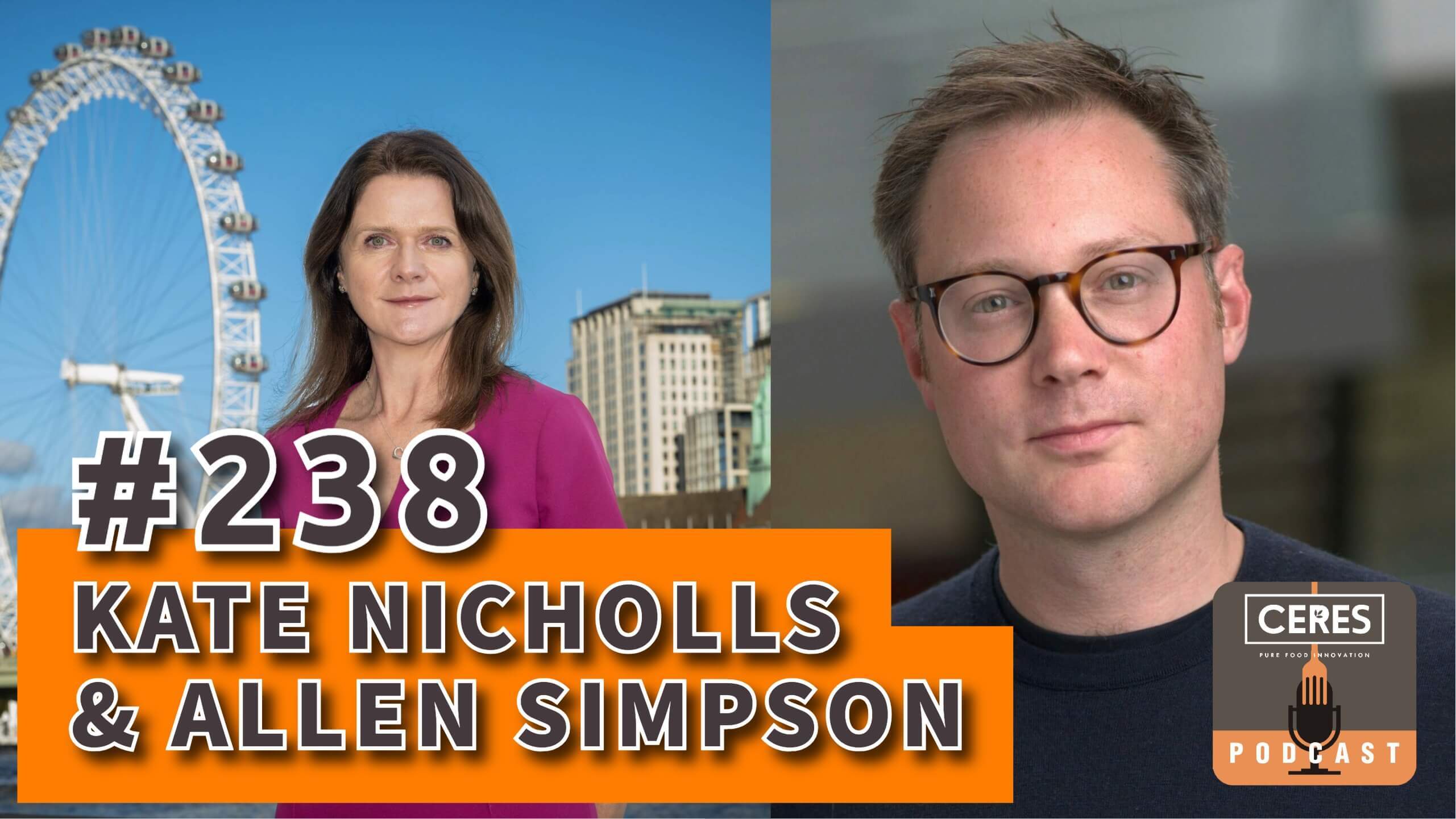
#238: Business rates, wages and the budget with UKHospitality’s Kate Nicholls and Allen Simpson
Posted by Emma on 20th Dec 2025 Reading Time:
Episode 238 of The Ceres Podcast is one of those conversations that lands with weight. Hosted by Stelios Theocharous, this episode brings together Allen Simpson, CEO of UKHospitality, and Kate Nicholls, Chair of UKHospitality, for a frank and wide-ranging discussion on the pressures facing hospitality businesses and what the latest budget decisions really mean on the ground.
For anyone running a pub, restaurant, hotel or fish and chip shop, this episode matters because it moves beyond headlines and soundbites. It explores how policy decisions around business rates, wages, VAT and employment reform translate into real consequences for jobs, investment and survival across the sector.
Business rates and the frustration of unfinished reform
A central theme of the episode is business rates and the growing sense of frustration felt across hospitality. Kate Nicholls describes how, for the second year running, the sector has been unable to draw a line under the budget and move on. Instead, campaign mode continues immediately because the impact has not matched the government’s stated intent.
Allen Simpson explains why claims of support through reductions in the multiplier fail to reflect reality. While the multiplier has fallen, rateable values have risen sharply, something the government knew in advance. The result is that many hospitality businesses still face increases of between 15 and 30 percent.
Kate Nicholls is clear that this is not about misunderstanding. Decisions were knowingly made, and hospitality has been treated differently from other sectors despite promises of reform. She describes business rates as a tax on investment and a tax on success, particularly for pubs, hotels and restaurants that are assessed on turnover rather than simple property value.
Making the case locally, not just online
One of the most practical and valuable parts of the conversation is the call for businesses to engage directly with their MPs. Both Kate Nicholls and Stelios Theocharous stress that venting frustration on social media does not move policy.
Kate urges operators to present real figures to their local representatives, showing last year’s bill, this year’s bill and the direct consequences for jobs, hours and investment. The message is simple but powerful. Make it real, make it local, and make it unavoidable.
Wages, compression and the risk to young workers
The episode also tackles wage policy and national living wage increases. Kate Nicholls explains how the minimum wage has shifted from being a safety floor to becoming the average wage across many sectors. This has led to wage compression, where experienced staff see little difference between their pay and that of new starters.
Both guests warn that this risks reducing opportunities for young people and first-time workers. Kate highlights the long-term consequences of youth unemployment, noting that extended periods without work between the ages of 18 and 24 can damage lifetime earnings and employment prospects.
Allen Simpson adds a moral dimension, questioning how much unemployment society is willing to tolerate as a trade-off for wage policy. He argues that these are decisions ministers should actively own, rather than outsourcing responsibility to advisory bodies.

Apprenticeships, welfare to work and cautious optimism
Despite the challenges, the episode is not without cautious optimism. Kate and Allen discuss new foundation apprenticeships and welfare-to-work schemes that could help hospitality businesses recruit and train staff.
They are clear that these initiatives are not silver bullets and are currently limited geographically. However, they represent recognition from government that hospitality plays a vital role in employment, particularly for those entering the workforce or returning after time out.
Kate makes a practical point. If funding is available, the sector should use it, while continuing to campaign for broader structural reform. Training, professionalism and career progression are all part of changing how hospitality is perceived by policymakers.
VAT, affordability and political trade-offs
VAT remains a recurring topic, and the discussion carefully unpacks why it is such a difficult issue politically. Kate Nicholls explains that the barrier is not economics but cost. A VAT cut of the scale requested would require billions in funding, forcing governments to choose between competing priorities such as public services, income tax thresholds or national insurance.
Allen Simpson adds that VAT operates differently in hospitality because of low margins and zero-rated inputs, making it effectively a tax on the business rather than purely a consumer tax. Both guests point to European examples but acknowledge that the UK’s single high VAT rate makes reform politically explosive.
What the future may hold and what businesses can do
Looking ahead, Allen Simpson warns that while exact job losses cannot yet be quantified, the combined impact of successive budgets will push more previously stable businesses into difficulty. Kate Nicholls reinforces the importance of data, membership and engagement.
She urges operators to support trade bodies, contribute to surveys and use shared evidence to strengthen the case for hospitality. Governments, she notes, do not save industries they believe are in decline. The sector must balance highlighting risk with demonstrating opportunity, growth and long-term value.