

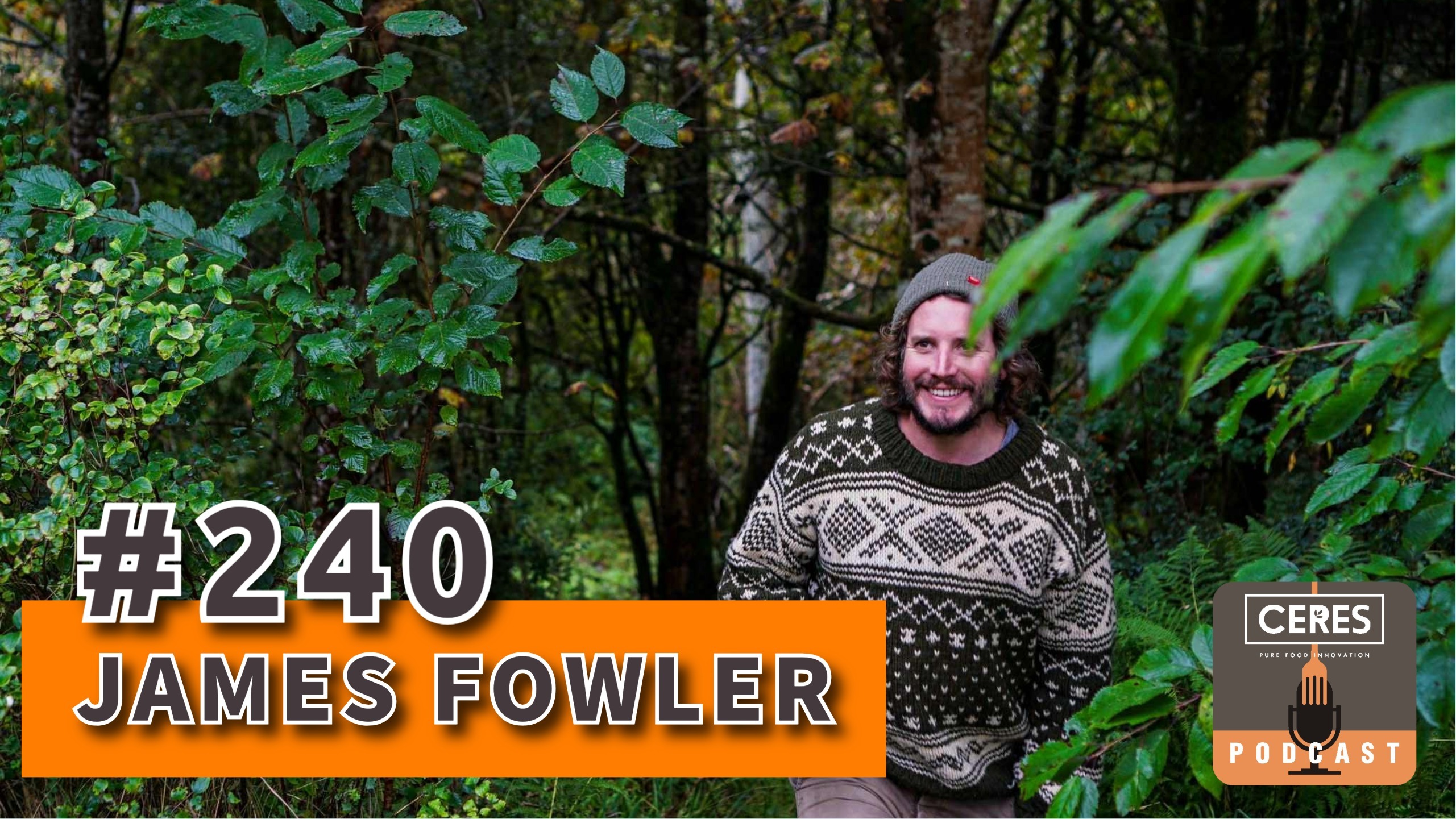
#240: The Larder House, wood fire cooking and the fight for fairer hospitality tax
Posted by Emma on 9th Feb 2026 Reading Time:
If you run a hospitality business, you will recognise the feeling that comes through this episode immediately: the sense that doing things properly is still the point, even when the economics are getting tighter by the month. In Episode 240 of The Ceres Podcast, host Stelios sits down with James Fowler of The Larder House in Southbourne for a wide-ranging conversation that moves from food culture and service standards to the hard realities of business rates, staffing, and what operators are prepared to do when they feel ignored.
It matters because it is not a theoretical debate. James speaks as someone who has stayed in the trade for more than two decades and has kept a local restaurant relevant for 15 years by refusing to compromise on quality, while also being candid about what has changed since Covid and why many independents feel they are being pushed to the edge.
The origin story that hospitality owners will relate to
James' route into the industry is unusually vivid. He describes falling in love with food through his mum’s cooking, then taking an academic detour into marine biology at Bangor University before being pulled back by the energy of food and drink. One of the most memorable early episodes is his “Pura Vida Fruit Bar”, run from a VW camper van with a thatched roof on Bournemouth beach, selling smoothies and fruit kebabs and trying to tempt kids away from cans of Coke with a free smoothie. It is a small anecdote, but it captures a mindset many good operators share: improve what is around you, make it appealing, and watch the queue form.
That early mix of hospitality and initiative runs throughout the conversation. James talks about learning cocktails, competing, getting recognised, and later noticing what he felt was a gap in some high-end restaurants: “how bad their spirit selections and drinks offerings were”. His conclusion was simple: if he ever had his own place, the drinks would receive the same attention as the food.

What makes The Larder House distinctive, and why it keeps customers coming back
When James explains what has kept The Larder House trading for 15 years, he stays focused on fundamentals: “quality and provenance”, celebrating local growers, and not reducing standards even when it would be easier. The operational detail will interest any owner or chef. He describes the restaurant as wood-fired, using “a big old style bread oven” rather than electric or gas, and more recently adding a charcoal grill positioned so guests can sit around the bar and watch steaks cooking.
For listeners in fish and chips and broader hospitality, this section lands because it is not marketing talk. It is an operator describing the choices that shape a guest experience and justify pricing: craft, theatre, and food that feels rooted in real cooking.
High streets, community, and why “convenience” is not the whole answer
A key theme is the role of the high street. Stelios pushes on what a thriving high street is for, and James' answer is direct: community, walkability, and the ability to fill the fridge without driving to a big supermarket and dealing with “that stress on a Saturday”. He acknowledges the internet’s impact, the shift towards more bars and restaurants, and the need for a balanced mix, while also naming the basics that still matter, including “a couple of good butchers”.
This is not nostalgia. It is a business argument for local footfall, and a social argument for why high streets work when they remain places people actually use.
The post-Covid customer shift operators keep talking about
Theocharous asks a question many owners have strong feelings about: are customers different now. James agrees and gives specifics rather than vague frustration.
-
More people learned to cook during Covid and now arrive with stronger opinions about food.
-
Dining has become more leisurely, with some diners behaving as if they can “rule the tables” more than before.
-
“No shows” are “at an all time kind of high”, and booking behaviour has shifted towards walk-ins.
There is a particularly telling moment when James says he was still hearing “I’ve got COVID, I can’t come to the restaurant” only a couple of months prior, and he simply does not want to hear it anymore. The point is not the phrase itself, but what it represents: the lingering normalisation of last-minute disruption, with the cost carried by the business.
Owners will also recognise the bind around deposits. James has tried taking them, then faced customer backlash, and ultimately worried about introducing another barrier when footfall has not returned to pre-Covid levels. It is one of the most practically useful parts of the episode because it frames the trade-off in plain terms: protect revenue, or protect demand.
Social media “review culture” and the search for outrage
The conversation takes a sharp turn into how food content has changed. Theocharous describes seeing individuals filming themselves reviewing meals, and argues that the platforms reward outrage because it cuts through noise. James’ stance is notably restrained. He says The Larder House does not chase social media heavily and prefers “organic growth”.
For hospitality operators, this part is valuable because it articulates a tension many feel: marketing is necessary, but performative outrage can damage trust and distort what the job is. The episode does not offer a neat solution, but it clarifies the cost of trying to compete in that attention economy.
Staffing realities and the hidden skills of hospitality management
James also speaks about staffing pressures after Brexit and Covid, noting that many European workers returned home during Covid and did not come back. He praises the hospitality culture he associates with French, Spanish and Italian workers, describing it as a “hospitality backbone” that is difficult to replace quickly.
Later, when asked what he would tell the Chancellor in a private conversation, he makes a point that will resonate with anyone who has ever run a shift short-staffed: hospitality management is skilled work. In one shift you might be “underneath a sink” fixing a problem, dealing with power issues, and still trying to keep service smooth while food leaves the kitchen. Theocharous sums it up plainly: you have to be resourceful and quick on your feet, and the dishwasher breaking does not pause the service.
The turning point: business rates, VAT, and the “taxed out” campaign
The episode’s most newsworthy segment is James explanation of what pushed local operators to act. He describes his involvement with a local hospitality group, the Wonky Table, set up during Covid to support businesses and later focused on VAT reform. He says their target was 13 percent VAT as a level that could create space for “growth” and stability.
James also recounts being invited by his local MP to meet Rachel Reeves the night before the Budget, getting only a few minutes to speak, and leaving with the impression that the scale of hospitality’s problem is not truly understood. After the Budget, he describes the impact locally: his restaurant’s business rates rising by around 25 percent, a deli across the road rising even more, and hearing of other local restaurants whose rates nearly doubled, while local Tesco and Sainsbury’s rates dropped significantly.
From there, the episode moves into the action that spread quickly: the decision to “ban” Labour MPs from participating venues, using the strapline “taxed out”. James frames it as political theatre designed to spark attention, not personal hostility towards individual MPs. He also addresses concerns he heard from locals, including suspicion about who funded the stickers, and clarifies it was simply him buying a large batch to get the message out.
Whether a listener agrees with the tactic or not, the business logic is clear: if operators believe they will lose more businesses than there are Labour MPs affected by the ban, the symbolic inconvenience is minor compared with the scale of closures they fear.