
#246: May Podsquad review: Trade reality, market pressure and simpler businesses
Posted by Emma on 19th May 2026 Reading Time:
Episode 246 of The Ceres Podcast brings together the Podsquad team for a grounded, honest and often very funny discussion about what fish and chip operators are actually facing in 2026. Hosted by Stelios Theocharous with Kelly Barnes, David Miller, David Nicolaou and Mark Petrou, this May Podsquad episode matters because it avoids theory and gets straight into the realities of trade, rising costs, customer behaviour and the difficult decisions operators are having to make.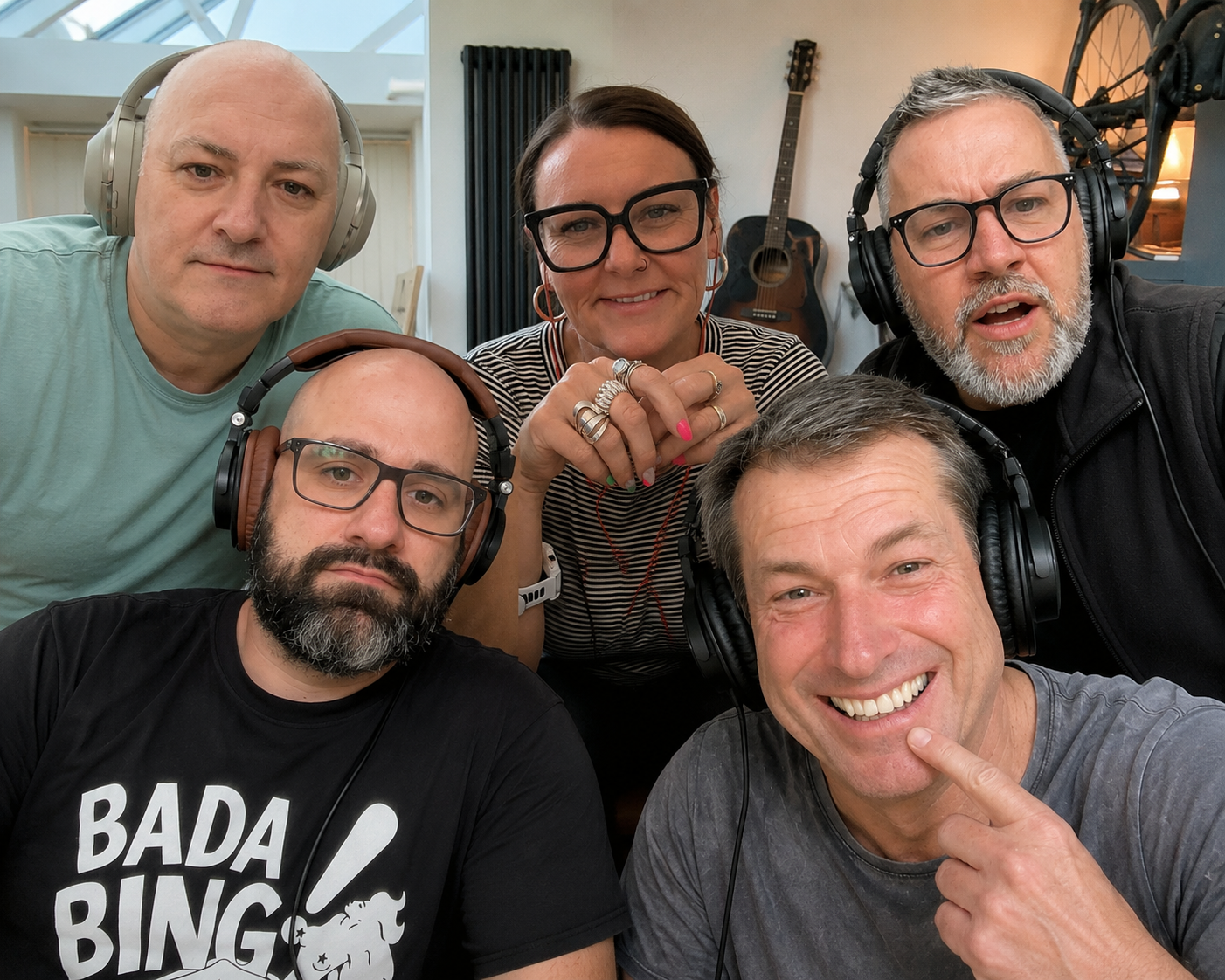 This is not a polished business seminar. It is better than that. It is a conversation between people who understand the trade from the inside, with all the frustration, humour, pressure and experience that comes with running real businesses.
Listeners can hear the full episode on Apple Podcasts.
Trade reality: busy does not always mean profitable
The episode starts with a direct question: how is trade? The answers are varied, but a pattern quickly appears. Trade is not dead, but it is different. Kelly Barnes describes a “buoyant couple of months”, while also admitting Easter was disappointing and that customers are now “more picky”. David Nicolaou says April was strong, but May had softened, linking some of that to wider negativity in the news and customers wanting “maximum bang for the buck”.
Mark Petrou gives one of the most practical summaries of the early part of the episode. His footfall is down, but takings are holding because prices have risen. That distinction matters. The shop may still be taking money, but that does not automatically mean growth. As Mark puts it, he is sharing the detail so other operators do not feel isolated if they are seeing the same thing.
David Miller then adds another crucial point. His shop is trading well, but the break-even point has moved. That is one of the strongest business lessons in the episode. Turnover alone is not enough. Operators need to understand where profit actually starts.
Value, price and what customers actually want
One of the strongest themes in the episode is the difference between price and value. Stelios challenges the assumption that customers simply want cheap food. His argument is that customers want value, but value is not the same as low price. It is a mix of quality, service, convenience, certainty and price.
David Nicolaou agrees, saying the industry is “utterly obsessed with price” and should focus more on the value of the offer. This is an important moment because it pushes the discussion away from discounting and towards better business thinking.
The conversation also touches on whether operators sometimes react too quickly to what customers say, rather than what customers actually do. Cheap deals, alternative species and lower price points might sound logical, but the panel repeatedly comes back to one point: customers often return to what they know and trust.
David Miller’s market report: potatoes, cod, haddock and hidden pressure
David Miller’s market report is one of the most valuable sections for operators. He explains that potatoes remain stable, with plenty of good quality crop still available, but warns that the current harvest is long and dry matter is high. On fish, the message is more complicated. Cod is expected to be short, quotas are under pressure and prices are likely to rise. Haddock appears more available, while pollock is discussed as a possible alternative.
The conversation then widens into supply chain pressure, fertiliser, haulage, fuel and global uncertainty. Stelios adds examples from conversations with farmers and mentions rising livestock costs, wool shortages and haulage costs increasing significantly. David Nicolaou adds that delays through major shipping routes may not be felt immediately, but after several weeks problems can start to compound.
For operators, the message is clear. Costs do not rise in isolation. Fuel, labour, fertiliser, fish, potatoes and delivery all connect. By the time those pressures reach the shop, they have already travelled through several layers of the supply chain.
Alternative fish species: will customers accept them?
The episode then moves into one of the most commercially important debates for the fish and chip trade: are customers ready to accept alternative species such as pollock or hake?
David Nicolaou frames the issue well. His concern is that operators and merchants may think logically about supply and cost, while customers think emotionally about habit, trust and familiarity. He questions whether customers will walk into a shop asking for cod or haddock, be offered pollock instead, and simply walk back out.
Stelios builds on that point by arguing that if customers truly optimised only for low price, cheaper fish species would already dominate the trade. Instead, over generations, customers have largely settled on cod and haddock. That suggests the decision is not just economic. It is cultural, emotional and habitual.
Kelly Barnes offers a practical middle ground. Krispies has pollock on the menu, but only if the quality is good enough. She makes it clear that cod will remain at the forefront, but that offering diversity can still make sense if the product stands up.

Attention versus demand
The social media section is one of the most interesting parts of the episode. Stelios introduces it with a sharp distinction: “attention isn’t demand, views are not revenue, followers are not loyalty.”
The panel explores whether fish and chip shops, and hospitality businesses more broadly, are now under pressure to become content creators. Kelly Barnes argues that video content does matter, especially for younger customers who often use social media almost like modern reviews. However, she also stresses quality over quantity.
David Nicolaou adds another angle by pointing out that some shops may now be building a separate revenue stream through TikTok live content. That raises an interesting question: is the business a shop with content, or a content creator with a shop?
Mark Petrou gives a strong warning: “attention isn’t always good attention.” His view is that social media is saturated, and only the people doing it really well now stand out. Miller’s in Haxby is praised as an example of content that shows passion, consistency and effort without feeling forced.
Public attacks, bad reviews and complaint culture
Mark Petrou’s segment on reputation and public attack is one of the most practical discussions in the episode. He raises the issue of anonymous posting, public social media criticism and how damaging it can be when complaints are made in unregulated spaces.
He also shares a simple but useful complaints process: acknowledge, validate, investigate, resolve and repair. His line about putting “the fun into no refunds” brings humour, but the point is serious. He would rather replace a meal and get a second chance to win back the customer than simply refund and lose the relationship.
Kelly Barnes shares some of the more absurd examples of modern complaints, including a Deliveroo customer who complained that a can of Coke was too cold, and another who complained that cheese was on their cheesy chips. The group discusses how aggregator refund systems can be heavily weighted towards the customer, especially when complaints are processed by AI.
David Miller brings the conversation back to humility and speed. His advice is to respond quickly, take complaints seriously and look for truth even when the feedback hurts. A phone call, he says, can make a real difference.
Copycat businesses and brand confusion
Kelly Barnes then shares the story of shops copying the Krispies brand identity. This includes similar branding, fonts, lighting, tiles and even the look of the shop. What makes the issue more serious is that reviews and customer confusion can start to cross over, especially when people do not realise they are dealing with a different business.
Her concern is not just annoyance. It is reputation and risk. If a copycat business has poor standards, an allergen issue or a damaging incident, customers may not immediately understand the difference between the original and the imitation.
The discussion is balanced. There are jokes, including the idea of visiting the copycat shops, but there is also a serious lesson. Operators with distinctive names, branding or concepts may need to think about trademarks and protection early, because enforcement becomes much harder later.
Closing a shop: contraction is not always failure
The final major discussion is the closure of Krispies on Pines Road. Kelly explains that the decision had been under review for around 12 months. Deliveries, overheads, staffing, rent, vehicle costs and the effect of having two shops close together all had to be considered.
Her key point is that the issue was not simply turnover. The issue was what the business was actually making after costs. By closing one site, Exeter Road became more profitable because the overheads were lower and the trade was consolidated.
It is one of the most honest sections of the episode. Kelly admits that closing the site did feel like failure at first, because so much work had gone into it. But the numbers made the decision clearer.
Stelios summarises the lesson well by saying that contraction can be a sign of discipline rather than failure. Many operators confuse expansion with strength, but expansion can also create risk. Sometimes the strongest move is to simplify, focus and protect the core business.
Why this episode is worth listening to
Episode 246 works because it is not just about fish and chips. It is about the pressures facing independent food businesses: rising costs, changing customer behaviour, social media noise, reputation risk, supply chain uncertainty and the hard decisions that come with running a business properly.
The tone is honest, operator-led and refreshingly human. There are jokes, disagreements, practical examples and moments of real vulnerability. For fish and chip shop owners, hospitality operators and food business professionals, this is the kind of episode that helps connect individual problems to wider industry patterns.
Listen to Episode 246 of The Ceres Podcast with Stelios Theocharous, Kelly Barnes, David Miller, David Nicolaou and Mark Petrou to hear the full May Podsquad discussion. Subscribe to The Ceres Podcast for more honest conversations about fish and chips, hospitality, food business and the realities of running successful operations in a changing market.